1. Who We Are
The World Bank Group is one of the world's largest sources of funding and knowledge for developing countries. Our vision is to create a world free of poverty on a livable planet.
| Five Institutions: One World Bank Group |
| International Bank for Reconstruction and Development (IBRD) |
| International Development Association (IDA) |
| International Finance Corporation (IFC) |
| Multilateral Investment Guarantee Agency (MIGA) |
| International Centre for Settlement of Investment Disputes (ICSID) |
Verticals(5): Digital, People, Planet, Prosperity, Infrastructure
2. Where We Work
The World Bank Group, with 189 member countries, operates in over 170 nations and collaborates with public and private sector partners to end poverty and address the world's most pressing developing challenges.
| Region | Africa, East Asia and Pacific, Europe and Central Asia, Latin America and Caribbean, Middle East and North Africa, South Asia |
| World Bank Group Portfolio Size (2024) | $117.5B (Billion) |
| World Bank Digital Commitments | $6.95B (Billion) |

Most countries, including high- and middle-income coutnreis, are facing a critical challenge: a profound shift in their population structure. Asia, wehre accounts for a large share of the world's population, is no exception. While most regions are experiencing stagnating population growth, Africa stands out as the only major exception, with its population projected to surge. By 2050, Africa is expected to account for about 25% of the world'd population.
3. The Role of the Digital and AI Vertical at the World Bank
- Critical for economic growth: strong digital infrastructure in a country often helps de-risk private capital mobilization as a 10% increase in broadband penetration can increase GDP by up to 2% in LICs/MICs
- Engine for job creation: broadening digital access will be the single greatest driver of new job creation as 10 of the 15 fastest growing jobs globally are in tech or tech-enabled roles.
- Essential for productivity gains: adopting digital streamlines processes, reduces transaction costs, and enables faster, more efficient use of labor and capital across sectors, as top three in-demand skills are all digital and ~87% of employers believe AI skills are going to be important for their sector.

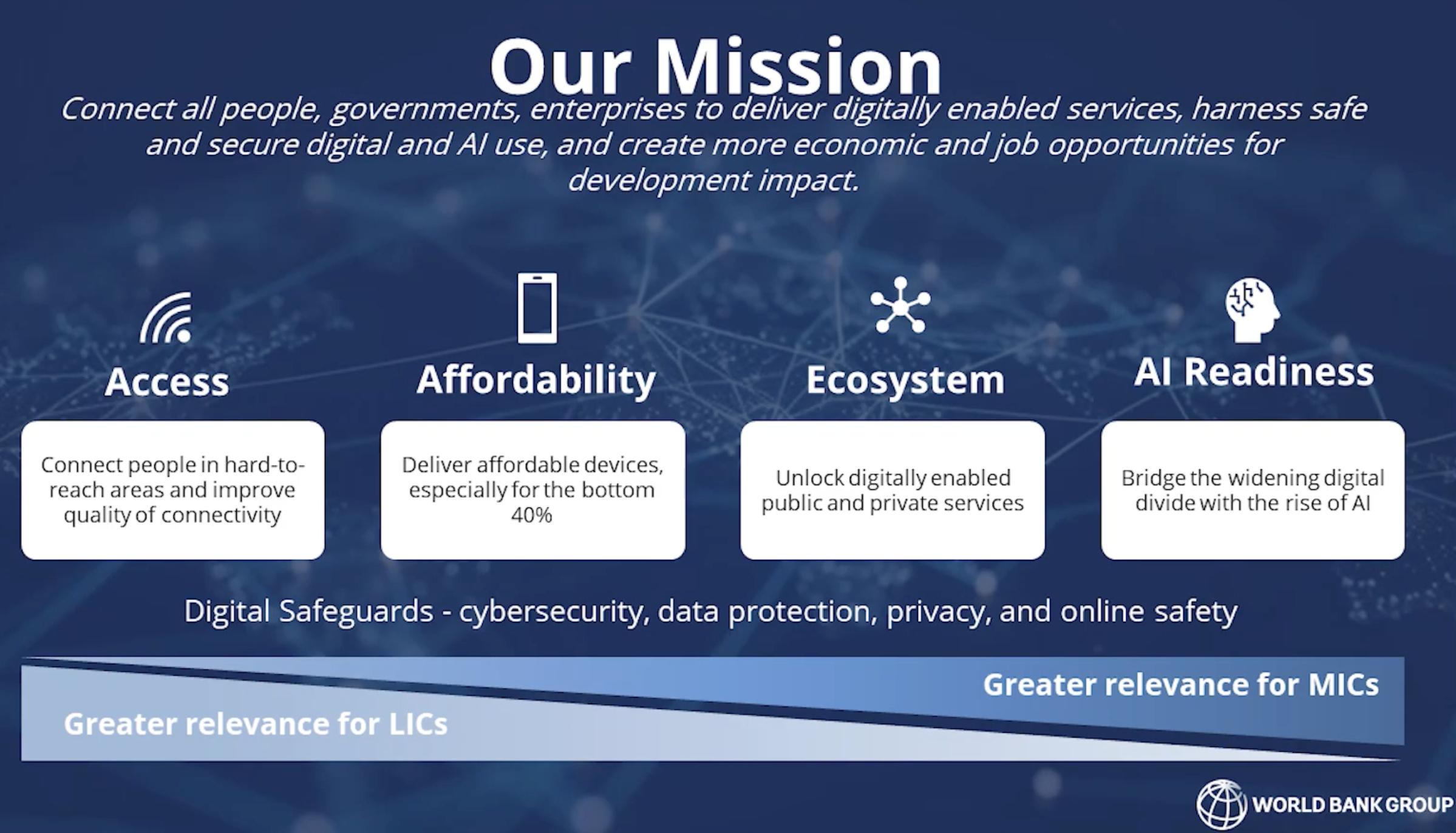
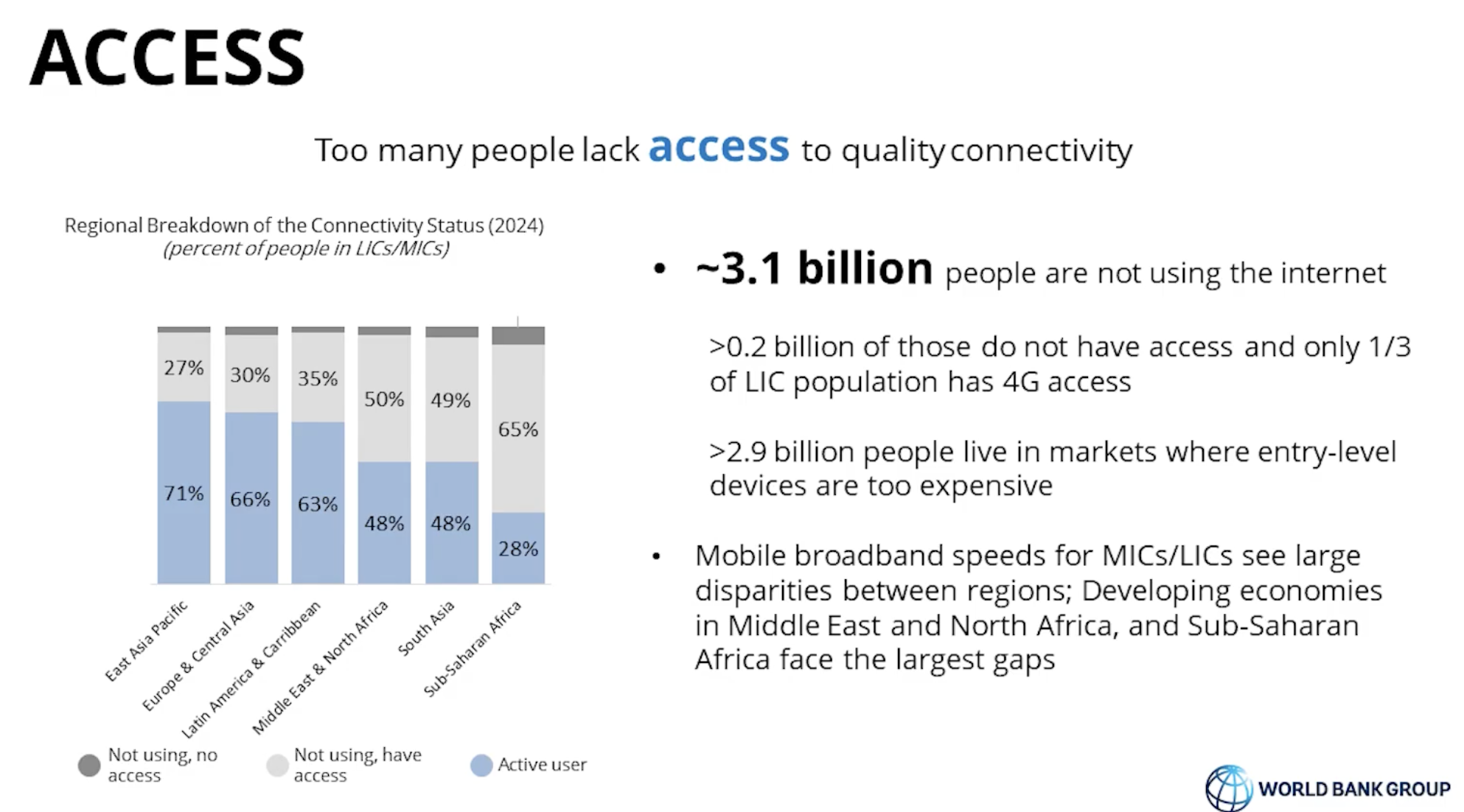
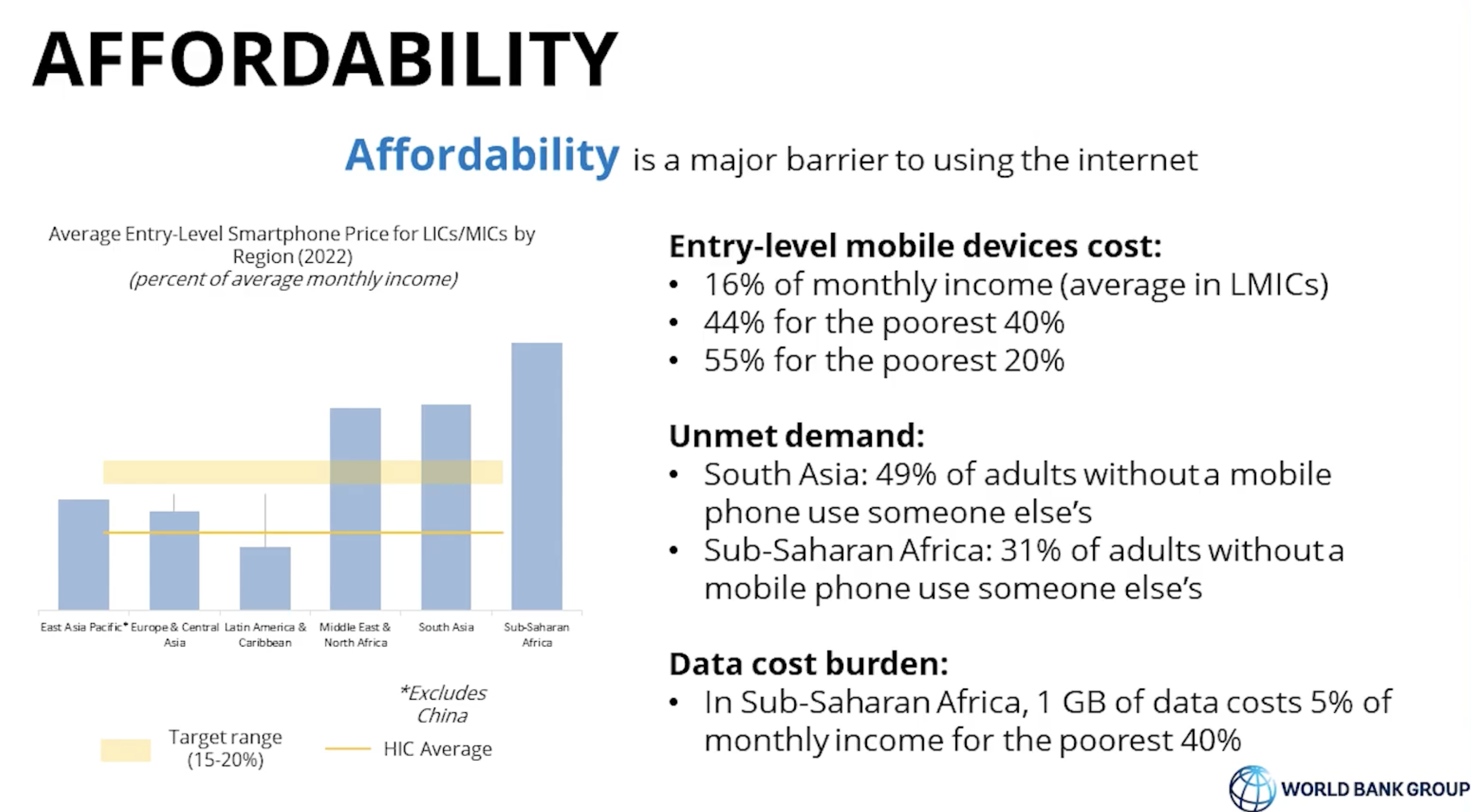
Broadband and digital infrastructure are the foundation of the digital economy. Most developing countries are beginning to expand basic internet access, but affordability is often overlooked; devices and services are too expensive relative to people's income levels. Ensuring that connectivity is affordable and income-matched is therefore a second key pillar of our mission.
Governments, individuals, and enterprises are the main economic agents, and their digital and AI readiness and expertise are critical for fostering innovation and building a dynamic industrial ecosystem. To support these four pillars of our work, cybersecurity, data protection, privacy, and online safety must be ensured; policies that strengthen these digital safeguards are also a core component of our mission.
We can broadly think of the first two missions–access and affordability–as being most relevant for low-income countries, given their significant infrastructure needs, while the other missions are most closely associated with the priorities of middle-income countries.
4. WBG Digital & AI Strategy




5. Role of Korean Expertise


The World Bank's first Digital Knowledge Center is expected to serve as a hub for leveraging Korea's past and present digital and AI policy experience to support developing countries. With the rapid advancement of AI, the global divide in AI capabilities has continued to widen. In Africa, the internet access gap remains a challenge; only about 27% of the population currently has internet access. However, when it comes to GenAI, Africa accounts for less than 1% of global GenAI traffic–around 0.6% in total. In this regard, Korea's policy experience and technical expertise can be harnessed to help strenthen Africa's digital and AI access, usage, and capabilities.
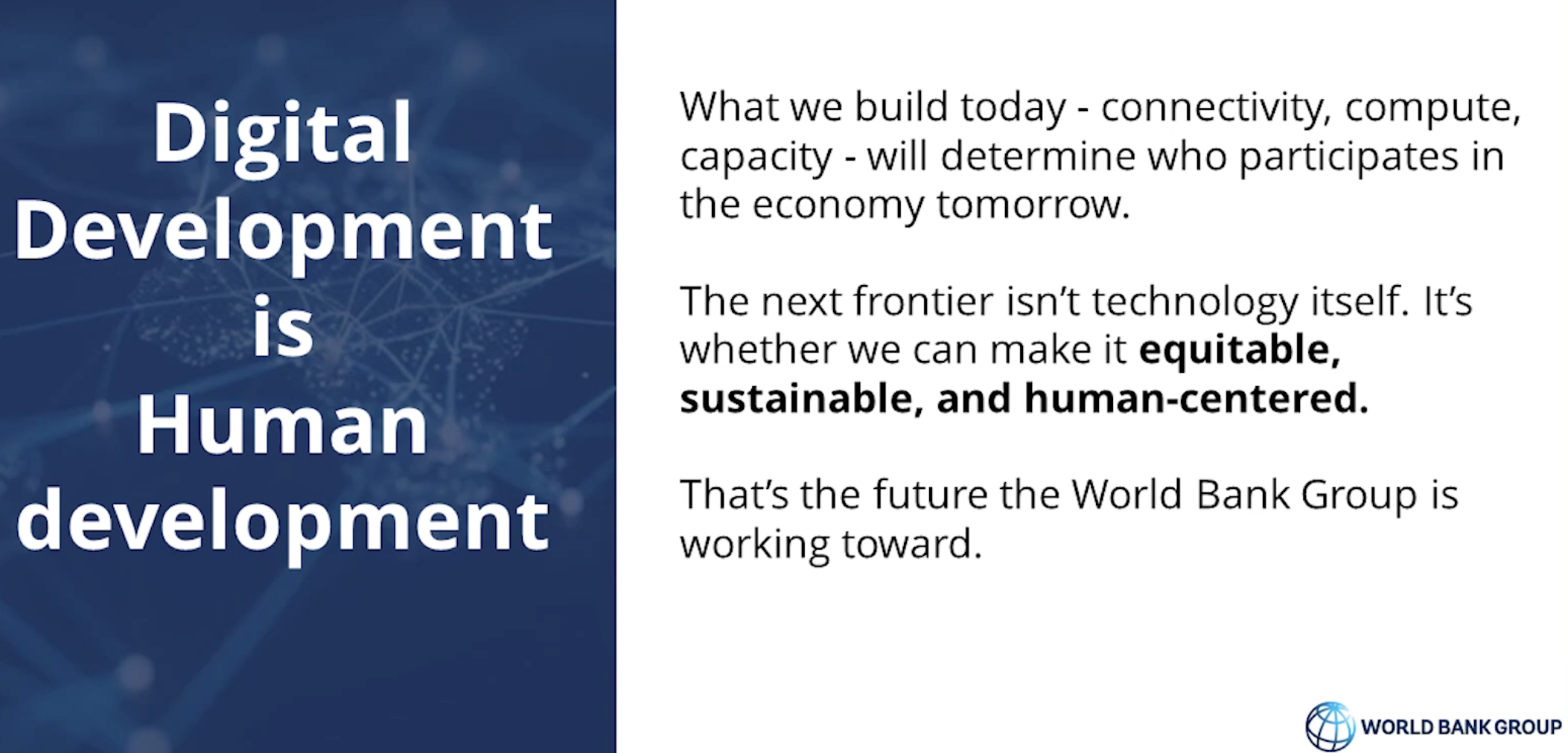
While digital technologies are powerful tools for boosting productivity, the World Bank's Digital VPU believes that digital development must be pursued in an equitable, fair, and environmentally sustainable way, and that it must be deployed safely and in a human-centered manner. Digitalization should serve as a means to reduce income inequality and narrow the income and opportunity divide by creating new opportunities for people in developing countries and for people everywhere to make a new leap forward. This transformation should not be driven solely by the interests of a few enterprises or by market expansion only, but anchored in inclusive and sustainable development outcomes.
Source: 김상부 세계은행 부총재님 특별강연: 개발도상국 디지털 경제개발 전력과 한국의 역할
'▪ Digital Transformation' 카테고리의 다른 글
| Telecom Regulatory Evaluation (0) | 2025.12.14 |
|---|---|
| Digital Frameworks (0) | 2025.10.13 |
| Digital Transformation (0) | 2025.10.12 |


